The Offshore Pipeline Market: Navigating the Depths of Global Energy Transport
The global energy landscape is underpinned by a vast, unseen network of arteries crisscrossing ocean floors. This is the offshore pipeline market, a critical sector responsible for transporting oil and natural gas from underwater wells to processing facilities on land. As the world grapples with energy security and transition, understanding this complex market is vital for professionals, investors, and engineers alike. This deep dive explores the market’s dynamics, key technologies, regional drivers, and what the future holds for this essential industry.
The offshore pipeline market is projected to see significant growth in the coming decade, driven by deepwater exploration, the rise of natural gas, and the need to replace aging infrastructure. This article will unpack the engineering marvels, economic forces, and environmental considerations shaping its trajectory.
What is Driving the Offshore Pipeline Market Growth?
Several powerful factors are fueling investment and development in subsea pipelines. The demand for reliable energy transport continues to grow, even amidst the shift towards renewables.
[H3] Rising Global Energy Demand
Despite advancements in renewable energy, fossil fuels still account for a major portion of the global energy mix. Developing economies, in particular, are increasing their consumption of oil and natural gas. Offshore pipelines remain the most efficient and economical method for transporting large volumes of hydrocarbons over long distances across seas.
Natural Gas as a Transition Fuel: The push for cleaner-burning fuels has positioned natural gas as a key transition energy source. This has led to increased investments in liquefied natural gas (LNG) terminals and the subsea pipelines that feed them.
Deepwater and Ultra-Deepwater Exploration: As shallow-water reserves deplete, exploration has moved into deeper waters. These remote finds are impossible to exploit without extensive pipeline networks to bring resources to shore.
Technological Advancements in Pipeline Engineering
Innovation has made previously unfeasible projects possible. These advancements reduce risk, cost, and environmental impact.
High-Strength Materials: The development of advanced steel grades and flexible composite pipes allows pipelines to withstand immense pressures at depths exceeding 3,000 meters.
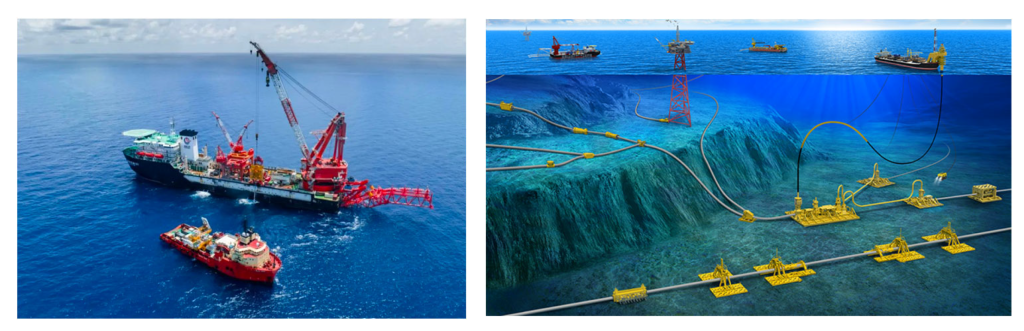
Improved Installation Vessels: Modern pipelay vessels, such as dynamic positioning S-lay and J-lay ships, can operate in harsh, deep-sea environments with greater precision.
Digital Monitoring and Integrity Management: Smart pigs (pipeline inspection gauges) equipped with sensors, along with fiber-optic monitoring systems, provide real-time data on pipeline health, preventing leaks and ensuring safety.
Key Challenges and Risks in the Sector
The offshore pipeline market is not without its hurdles. These challenges shape project economics and influence where and how companies invest.
Environmental and Regulatory Hurdles
Installing pipelines on the seabed disturbs marine ecosystems. Stringent environmental regulations govern every phase, from seismic surveys to decommissioning.
Environmental Impact Assessments (EIAs): These are mandatory, complex, and time-consuming, requiring extensive studies on potential effects on marine life.
Decommissioning Liabilities: The cost and responsibility of safely removing pipelines at the end of their life cycle are significant concerns for operators and governments.
High Capital Expenditure and Project Complexity
Offshore pipeline projects are among the most capital-intensive industrial endeavors.
Massive Upfront Costs: Expenses include pipeline material, specialized vessels, engineering, and years of planning. A single deepwater pipeline project can cost billions.
Geopolitical and Market Volatility: Pipelines often cross international boundaries, introducing geopolitical risk. Furthermore, project viability is tightly linked to volatile oil and gas prices.
Regional Analysis: Where is the Action?
Market activity is concentrated in regions with abundant offshore reserves and the capital to develop them.
North America: The Gulf of Mexico remains a mature but active hub, with a focus on tie-backs to existing infrastructure and gas transport.
Europe: The North Sea is a key region, with major investments directed towards maintenance, upgrades, and pipelines supporting offshore wind farms (cable laying shares technology with pipeline laying).
Asia-Pacific: This is the fastest-growing region. Massive projects are underway off the coasts of Australia, Southeast Asia, and particularly China, driven by soaring energy demand.
Middle East & Africa: Giant gas fields in East Africa (Mozambique, Tanzania) and ongoing developments in the Persian Gulf are creating new pipeline corridors.
The Future Outlook: Trends Shaping Tomorrow’s Market
The offshore pipeline market is evolving. Here’s what industry leaders are preparing for.
The Energy Transition’s Dual Impact
The shift to a low-carbon future presents both a threat and an opportunity.
Carbon Capture, Utilization, and Storage (CCUS): Offshore pipelines will be crucial for transporting captured CO2 to subsea storage sites. This emerging segment could become a major growth driver.
Hydrogen Economy: Research is ongoing into repurposing existing pipelines or building new ones to transport green or blue hydrogen from offshore production sites.
Digitalization and the Rise of the “Smart Pipeline”
The future is digital. AI and machine learning will analyze integrity data to predict failures before they happen. Digital twins—virtual replicas of physical pipelines—will allow for simulation and optimization of operations, reducing downtime and risk. For more on how technology is transforming energy infrastructure, you can explore our article on digital trends in oil and gas.
Conclusion: A Market in Transition
The offshore pipeline market remains a cornerstone of global energy security, adept at navigating both literal and economic depths. While its traditional role in oil and gas transport will continue, particularly for natural gas, its future is being reshaped by the energy transition. Growth will be fueled by deepwater projects, technological advancements in materials and monitoring, and emerging applications in CCUS. For professionals and businesses in this sector, success will depend on adaptability, embracing digital innovation, and navigating an increasingly complex regulatory and environmental landscape. The companies that can build and maintain this critical infrastructure safely, efficiently, and with an eye on the future will lead the way.
FAQ Section:
What are the different types of offshore pipelines?
A: There are two main types: Flowlines, which connect a subsea well to a platform, and Export Pipelines, which transport processed oil or gas from the platform to an onshore terminal. They can also be classified as rigid (steel) or flexible (composite) pipes.
How long does an offshore pipeline typically last?
A: The design life of an offshore pipeline is usually between 25 to 40 years. However, with proper maintenance, integrity management, and occasional upgrades, many pipelines can remain in safe operation for longer periods.
What is the biggest challenge in building an offshore pipeline?
A: One of the most significant technical challenges is laying pipelines in ultra-deepwater environments, where extreme pressure, low temperatures, and difficult seabed terrain test the limits of materials and installation technology.
How is the offshore pipeline market connected to renewable energy?
A: The connection is growing. The industry’s vessel fleet and subsea engineering expertise are directly applicable to installing and maintaining cables for offshore wind farms. Furthermore, pipelines are seen as a potential solution for transporting hydrogen or captured carbon dioxide.
Where can I find reliable data on global offshore pipeline projects?
A: Authoritative data can be found through industry research firms (e.g., Wood Mackenzie, Rystad Energy) and government energy agencies. A good public resource for energy infrastructure data is the U.S. Energy Information Administration (https://www.eia.gov/).